






By classifying fiber-optic technicians as electrical workers under the state’s prevailing wage law, Pennsylvania’s labor costs for broadband deployment have soared beyond what federal funds can be used for.
Pennsylvania’s final Broadband Equity Access and Deployment (BEAD) Program proposal was recently approved by the National Telecommunications and Information Administration (NTIA), but there’s a condition attached.
For Pennsylvania to receive the $711 million in funding for its plan, the state will have to accurately classify fiber-optic technicians.
Under current state prevailing wage law, fiber-optic technicians are classified as electric workers. The result is a significantly higher cost for broadband deployment than neighboring states.
At a recent conference, NTIA Administrator Arielle Roth said Pennsylvania is “driving up costs” by inaccurately classifying broadband deployers. The classification issue could lead to delays in Pennsylvania receiving BEAD funds to connect residents, particularly in rural areas.
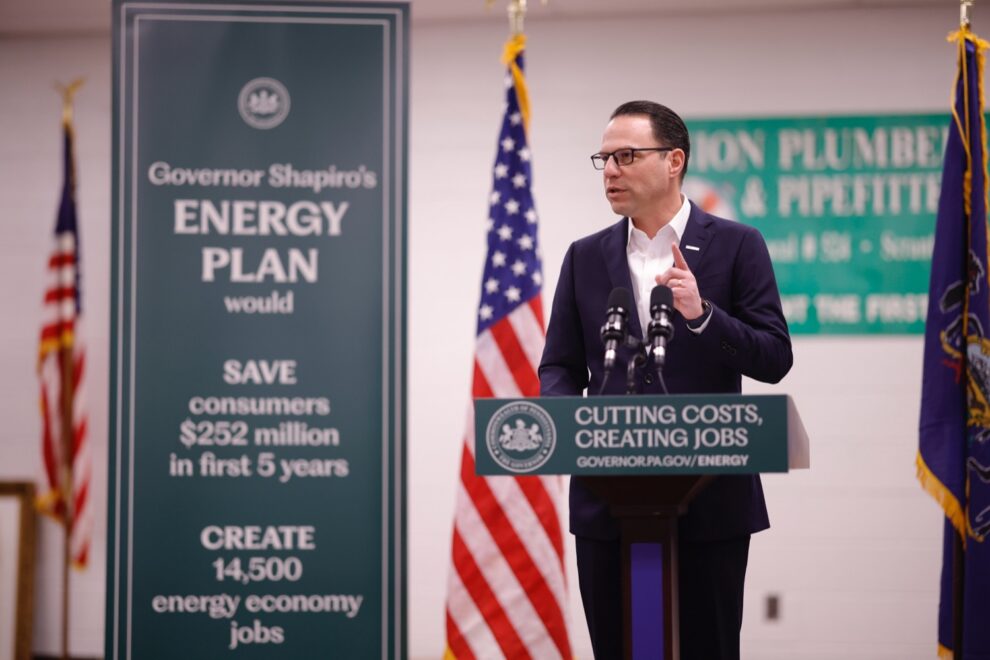
State officials, including Governor Shapiro, have refused to accurately classify fiber-optic technicians under the state’s prevailing wage law.
The issue has long plagued Pennsylvania and was the subject of recent litigation. Verizon and the Broadband Communications Association of Pennsylvania (BCAP) recently took action in court over the issue.
Pennsylvania’s Department of Labor and Industry has resisted the change, maintaining that workers installing fiber-optic cable should be classified as “electrical linemen.” Verizon and BCAP argue that the types of work are fundamentally different. They argue that classifying fiber technicians as electrical workers inflates their wages by nearly $20 per hour.
Verizon and BCAP elevated their challenge to a state appeals board and the Commonwealth Court. Last week, the court sided with the Department of Labor and Industry’s decision to maintain current and inaccurate classifications.
“For the state to artificially inflate the wage rates on a taxpayer-funded program is just absurd,” said BCAP President Todd Eachus.
Under state law, the Department of Labor and Industry can create new classifications upon request if it determines there is enough evidence that a new category is supported by “custom and usage” in the construction industry.
BCAP and Verizon have long argued for a new classification in letters and legal filings. Verizon argued that deploying fiber broadband involves entirely different work than electrical classification, which involves high-voltage transmission lines and is inherently more dangerous.
Experts across the industry agree that the state’s current classification is not accurate.
“We’re trying to have the prevailing wages from one skillset and job applied to a different skillset and job,” said Sascha Meinrath, a professor of telecommunications at Penn State.
Labor typically accounts for about two-thirds of the cost of deploying fiber, according to a recent report from the Fiber Broadband Association.