





Carnegie Mellon University disclosed $3.9 billion in foreign gifts and contracts since 1986, trailing only Harvard, as new federal data highlights Qatar’s major role in underwriting the university’s overseas campus.
Carnegie Mellon University received the second-highest amount of foreign funding of any U.S. college, according to newly released federal data, with nearly half of its $3.9 billion total tied to Qatar.
Data published this week by the U.S. Department of Education show that from 1986 through 2025, CMU reported $3.9 billion in foreign gifts and contracts. Only Harvard University reported more, at $4.2 billion.
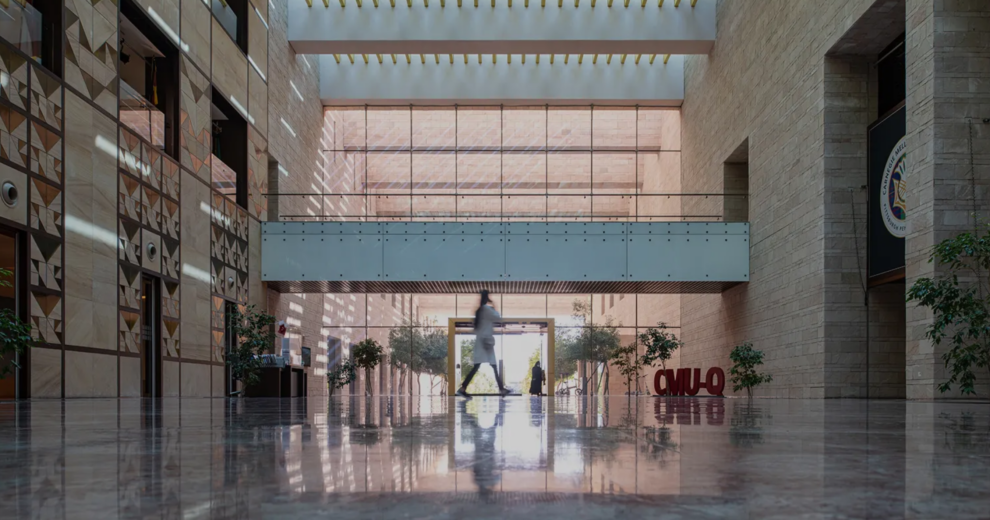
Nearly $2 billion of CMU’s total came from Qatar, where the university has operated a campus since 2004. CMU spokesman Chuck Carney said more than 90% of the Qatar-related funding is spent in that country to run the university’s branch campus.
“The costs of operating the CMU-Q campus are underwritten by the Qatar Foundation, pursuant to agreed-upon annual budgets, which are reported each year to the Department of Education, as required by law,” Carney said.
Beyond Qatar, CMU’s largest foreign sources include Bermuda at $752.2 million, Canada at $298.8 million and Portugal at $126.4 million. The federal data also identified $62.5 million from what the government labels “countries of concern,” including $59.7 million from China and $2.9 million from Russia.
Nationwide, Qatar ranks as the top foreign contributor to U.S. higher education institutions, with more than $7.7 billion disclosed since 1986. China follows at $6.4 billion, and Germany at $4.7 billion. Overall, universities have reported more than $67 billion in foreign funding during that period, with most disclosures occurring after 2019.
Under the Higher Education Act, colleges that receive federal financial assistance must report foreign gifts and contracts of $250,000 or more. While institutions have long been required to submit those disclosures, the Trump administration said this week’s public release of the data is intended to improve oversight.
The administration said in a press release that making the information widely available brings “transparency and accountability to foreign funding disclosures as required by law.”
U.S. Department of Education Secretary Linda McMahon said the online portal enhances visibility into international financial ties involving American universities.
“This marks a new era of transparency for the American people and streamlined compliance for colleges and universities, making it easier than ever for institutions to meet their legal obligations,” McMahon said. “Under President Trump’s leadership, we remain firmly committed to ensuring that universities uphold their legal and ethical obligations to disclose the true origins of their foreign relationships.”
Other Pennsylvania institutions also reported significant foreign funding. The University of Pennsylvania disclosed $2.79 billion, with Germany, China and England among its largest contributors. Penn State reported $722.4 million, led by Saudi Arabia, Malaysia and the United Arab Emirates. The University of Pittsburgh reported $148.9 million, while Robert Morris University, Indiana University of Pennsylvania and Washington & Jefferson College each reported smaller totals.