



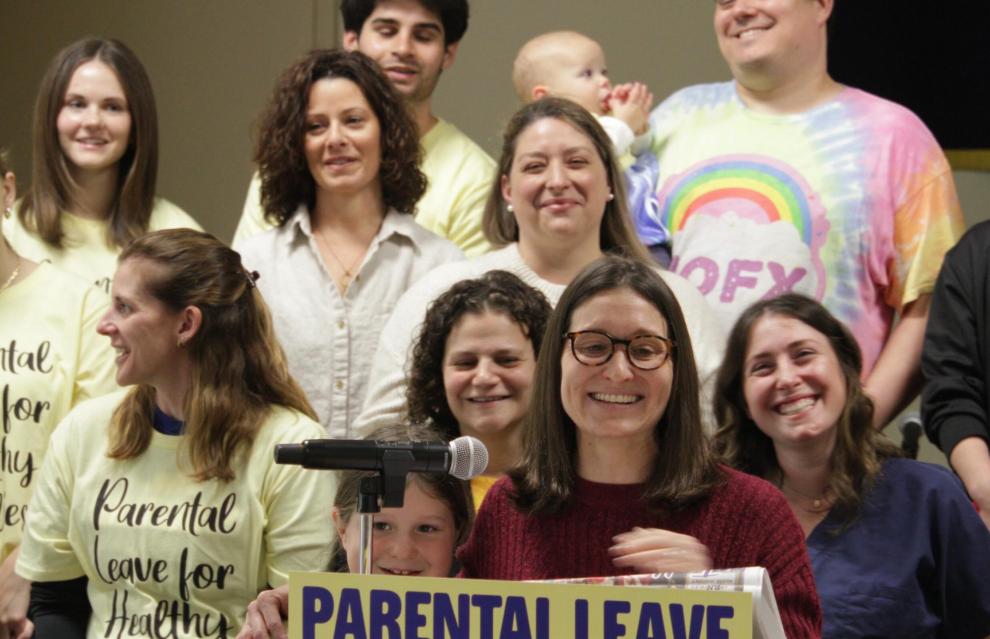
The board shaved six weeks off the proposal and changed requirements after public feedback and criticism.
The Allegheny County Board of Health recently released an updated paid parental leave proposal after taking public feedback. The controversial proposal formerly included 18 paid weeks of leave.
The proposal was made when county executive Sara Innamorato announced that she is expecting her first child in November.
The original proposal required businesses of all sizes to provide 18 weeks of paid leave with no minimum employee threshold. All employees would have been eligible after working for an employer for just 30 days. The original draft was proposed in May.
Under the newly revised proposal, the board cut six weeks off, bringing the paid leave to 12 weeks. The proposal would only apply to Allegheny County businesses with 15 or more employees, and employees would have to be employed for at least six months to qualify. Part-time employees would have to have logged 625 hours to qualify.
Under the revised policy, eligible employees would receive up to 100% of their wages during leave. The maximum paid parental benefit would be $4,200 per week. The new proposal also includes provisions for unforeseen health circumstances, including stillbirths.
“Access to paid leave is associated with reduction in infant hospitalizations, particularly for conditions such as respiratory infections, as well as improvements in breastfeeding duration (and) maternal recovery following childbirth,” said Dr. Iulia Vann, director of public health for the Allegheny County Health Department.
“It also increases the likelihood that individuals with access will access postpartum and preventative care services, which are critical to reducing complications and promoting long-term health,” Vann continued.
From May through early September, the public gave feedback and the original proposal sparked criticism. Labor groups, healthcare professionals, and family advocates voiced their support for the proposal. However, business leaders voiced their concern about the financial strain the original proposal would have put on Allegheny County businesses.
After a public comment period, more than 1,500 comments on the original proposal resulted in 56% of the comments in support of the original proposal. Officials noted that they took feedback into account when they altered the proposal.
“However, we did hear the folks that had mixed reviews, and we did hear the folks that had opposition, and we understand, and it’s our obligation to take all of those comments into consideration,” said Kim Joyce, COO of the Allegheny County Health Department.
The new proposal includes a six-month implementation period after the legislation is signed into law. Up to six months of additional time would be permitted for employers that need the extra time to align implementation with their fiscal year or budget cycle.
The Allegheny Conference on Community Development came out forcefully against the proposal on Wednesday night.
“Mandating a 100% employer-paid requirement – rather than utilizing a state-level, insurance-based funding model common in other jurisdictions – places an uncompetitive financial and administrative burden directly on local employers,” the organization wrote.
“As Allegheny County competes regionally and nationally for investment and workforce growth, establishing a localized benefit mandate risks putting our region at a distinct economic disadvantage. We urge county leadership to pursue data-driven, employer-informed policy solutions that foster both family well-being and regional competitiveness,” the statement continued.
Once the Board of Health passes the policy, it would be voted on before the full county council. Innamorato would then sign it. A special meeting is set to be held on September 28 by the Board of Health on the subject of the proposal.
“It is important to remember that today is not a final decision,” Vann said when the revised policy proposal was released, “but an opportunity to share the revised proposal, which reflects community input.”