




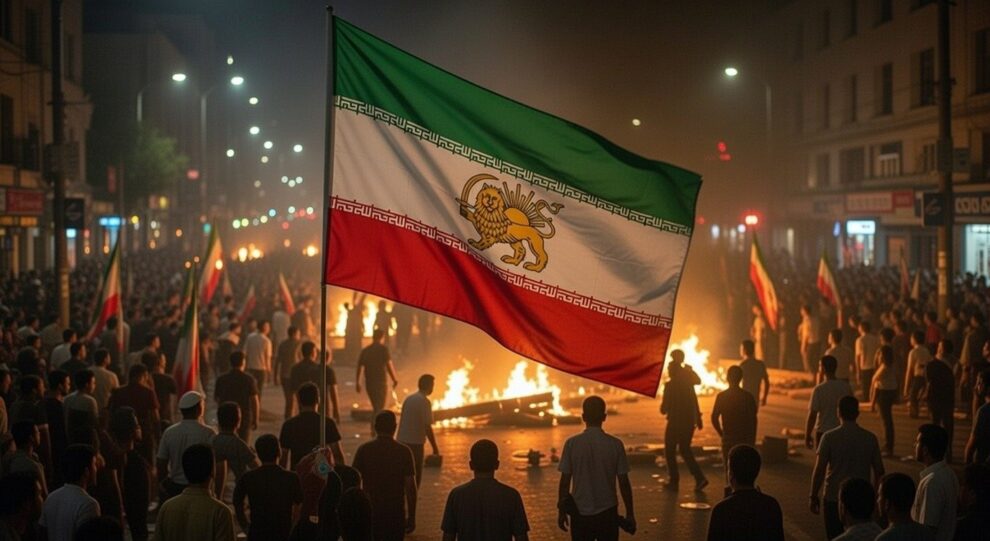
Weeks of protests against Iranian leadership destabilized the country, even as Tehran is “open” to talks.
President Donald Trump warned Sunday that the United States is considering “very strong options,” including possible military action, in response to Iran’s deadly crackdown on nationwide protests that have killed hundreds. The anti-government demonstrations came to a head late last week after Tehran’s draconian response threatened to further destabilize a country already pushed to the brink by economic instability and harsh living conditions. The Trump administration said it is monitoring the situation and would act if Iranian forces continued to harm civilians, a move Tehran has met with defiant rhetoric.
With unrest entering its third week and protests now growing in dozens of cities, the Iranian regime deployed security forces across the country in an effort to suppress crowds. Human rights groups say hundreds have been killed and thousands detained, with overall numbers “soaring”. Iran has imposed rolling internet shutdowns and media restrictions in an effort to contain negative coverage. Despite the crackdown, officials in Tehran have said they remain “open” to talks with the United States, even as Trump warned the response to the protests were “crossing red lines.”
“They’re starting to, it looks like, and there seem to be some people killed that aren’t supposed to be killed,” the president said. “These are violent — if you call them leaders, I don’t know if they’re leaders or just if they rule through violence. And we’re looking at some very strong options. We’ll make a determination.” Trump’s comments come during a time of heavy foreign involvement from the U.S. on the heels of a successful special forces operation against Venezuela and threats from Cuba.
The Associated Press reported on Sunday that the death toll surpassed 550, confirming President Trump’s reports that Iran had security forces shooting into the crowd as well as encouraging stampeding. The regime responded promptly to the president’s comments, saying they would treat U.S. military personnel and Israel as “legitimate targets” should the U.S. intervene with the demonstrations. It’s expected that total arrest numbers will surpass 12,000 by the end of the week.
Despite the hostile rhetoric, Iran’s leadership has signaled that it is open to negotiations with the United States. Iranian Foreign Minister Abbas Araghchi said Tehran is “prepared for war” but would consider “honorable and fair” negotiations based on mutual respect, and officials confirmed that diplomatic communication channels with U.S. envoys remained open. President Trump and Secretary of State Marco Rubio echoed Araghchi’s words, saying Iranian leaders have called to negotiate and that a meeting is being arranged. The president warned he was willing to act against Tehran before the talks could occur, however, if the situation “deteriorated” any further.
The protests, which began as outrage over rising prices, unemployment, and corruption, quickly broadened into open challenges to the Ayatollah’s rule and extremely broad security infrastructure. The unrest is potentially the largest challenge to the Islamic Republic’s reign in decades. Despite this, Iran’s president refused to soften his stance on the demonstrations and warned protesters against “destabilizing” the country.